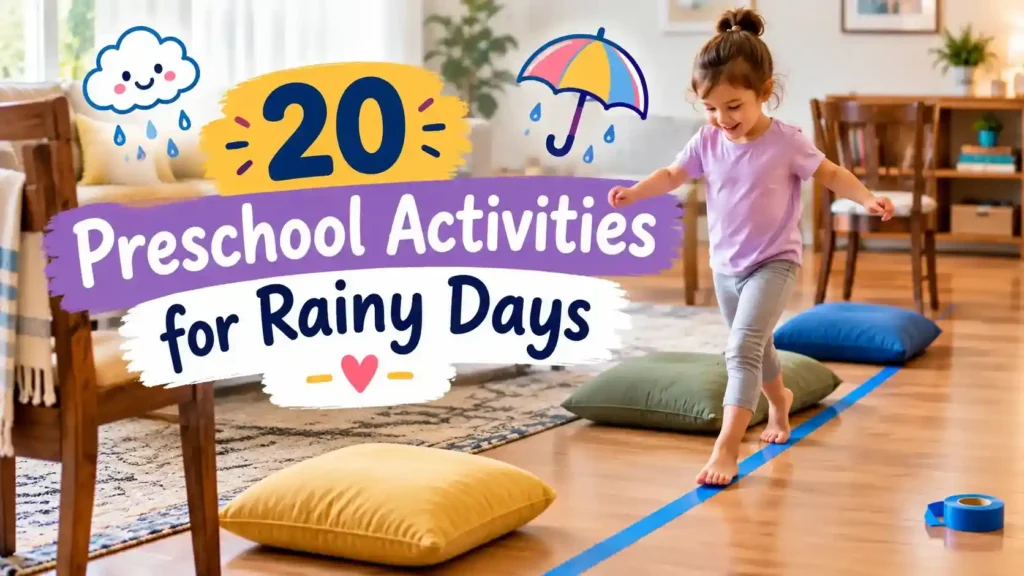
20 Preschool Activities for Rainy Days (No Prep Needed)
Rain outside kids stuck inside and “I’m bored” before you’ve even had your coffee. Every mom of a preschooler knows this feeling.
These 20 activities are made exactly for that moment. They are simple made for preschool age kids and need nothing you don’t already have at home. Any mom can pick one and start playing with her kids in the next two minutes, no shopping, no prep, no stress.
I’ve spent the last six years teaching preschool age kids and this list comes straight from what actually works in a real classroom on a rainy day not just what looks good on Pinterest.
Why Rainy Day Play Still Matters for Preschoolers
A day indoors doesn’t have to be a wasted day of learning. Preschoolers pick up early skills through ordinary play far more than through anything that looks like a lesson. Gross motor games build coordination and body control.
Simple counting and letter games support early literacy the same way a classroom circle time does. Quiet independent play, like flipping through a picture book or working on a puzzle, builds focus and the ability to sit with a task, which is a skill kindergarten teachers look for on day one.
The activities below are grouped by energy level since that’s usually the real question on a rainy morning: does your child need to burn energy first or calm down?
Quick Pick: Match the Activity to the Moment
| If your preschooler is… | Try these first |
|---|---|
| Bouncing off the walls | Indoor obstacle course, Freeze dance, Balloon keep-it-up |
| Getting whiny or overtired | Blanket fort, Story time with flashlights, Copy my face |
| Bored and looking for a project | Scavenger hunt, Paper plate masks, Indoor bowling |
| Needing quiet focus before nap | Puzzle time, I spy, Sock puppet show |
High Energy Games to Burn Off Wiggles
Preschoolers who have been cooped up for even an hour tend to get louder and more scattered before they settle. These games work off that energy in a small space no equipment required.
1. Indoor Obstacle Course
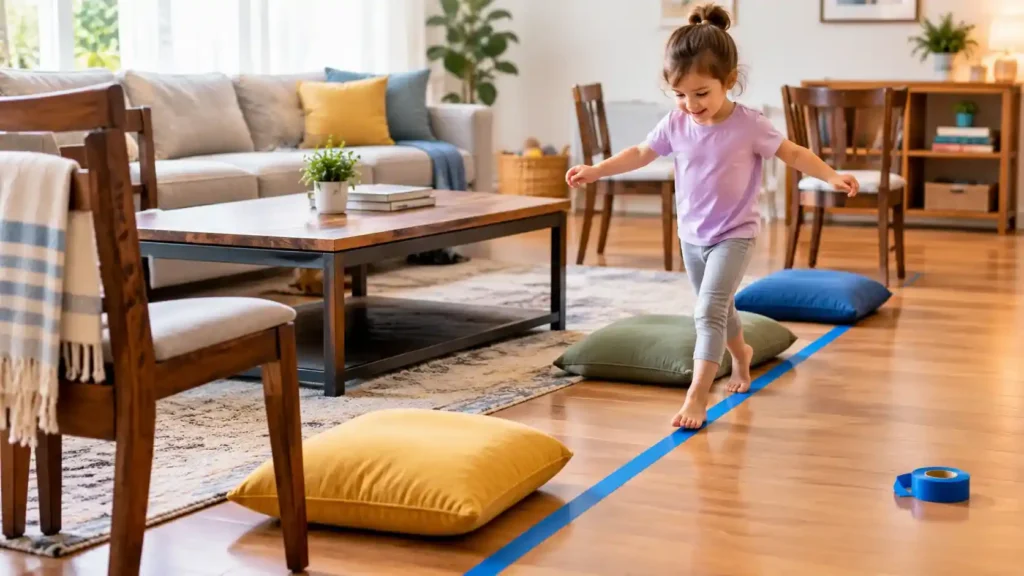
Use sofa cushions, dining chairs and a roll of tape to build a path across the living room. Crawl under the coffee table, hop over a cushion, walk along a taped line heel to toe. Rotate one element every few rounds to keep it interesting. This builds gross motor skills and balance, and most kids will happily run it ten times in a row.
Clear the floor of small toys first and keep an eye on anyone climbing on furniture.
2. Freeze Dance
Put on a playlist and dance until the music stops then freeze in place. Whoever wiggles first calls the next freeze. No equipment beyond a phone or speaker and it works just as well with one child as with three.
3. Balloon Keep-It-Up
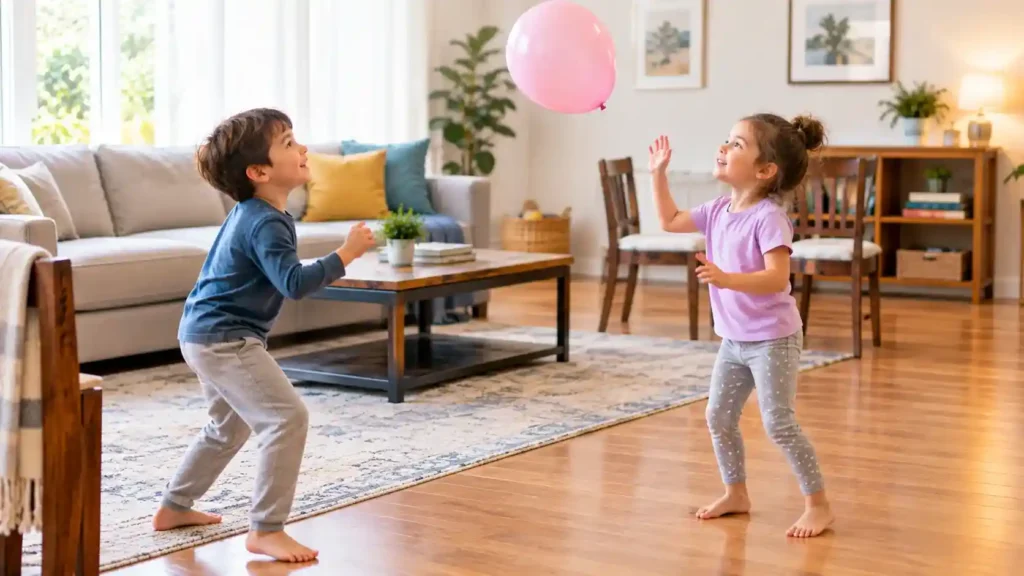
Tap a balloon back and forth and try not to let it touch the floor. It’s slower than a real ball, so it’s forgiving of small hands and low ceilings and it works on hand eye coordination without anything breaking.
Skip this one with children under three since a popped balloon is a choking risk.
4. Floor Is Lava
Scatter cushions and stuffed animals across the floor and announce that the carpet is lava. Kids have to move from one safe spot to another without touching the ground. Add a rule like hopping on one foot to raise the challenge for older preschoolers.
5. Simon Says
The classic works because it teaches listening and following two-step directions both things preschool teachers spend a lot of time on. Keep the actions big and silly (touch your toes, spin in a circle, flap like a bird) to hold attention.
6. Indoor Bowling
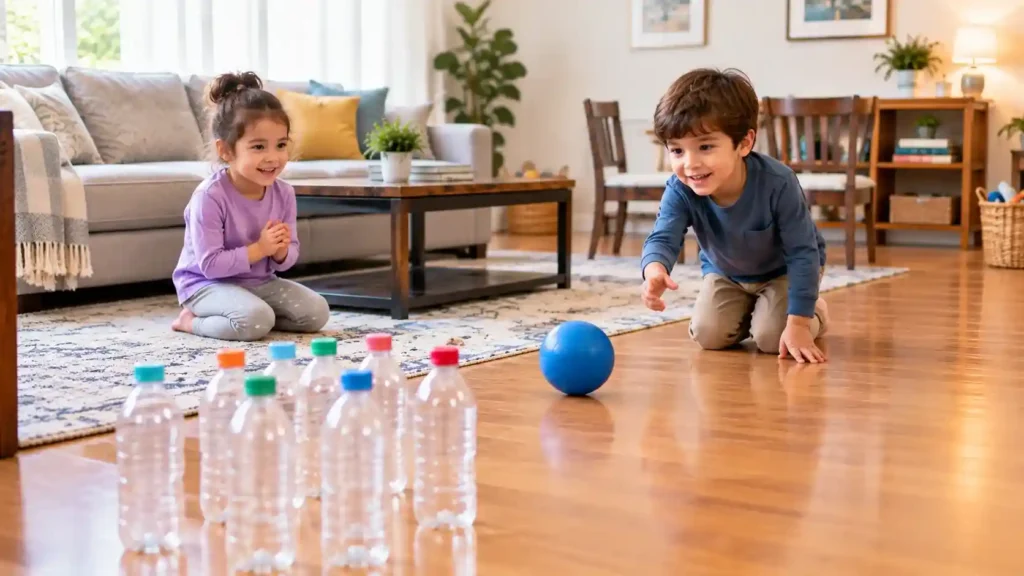
Line up empty water bottles or plastic cups and roll a ball to knock them down. Reset and go again. It’s simple, but the setup and reset time is part of the fun for this age group, and it quietly practices counting as they tally how many fell.
Calm and Quiet Activities for Wind-Down Time
Every rainy day needs a lower gear, especially before naps, meals or bedtime. These need nothing more than what’s already in your living room.
7. Blanket Fort and Book Nook
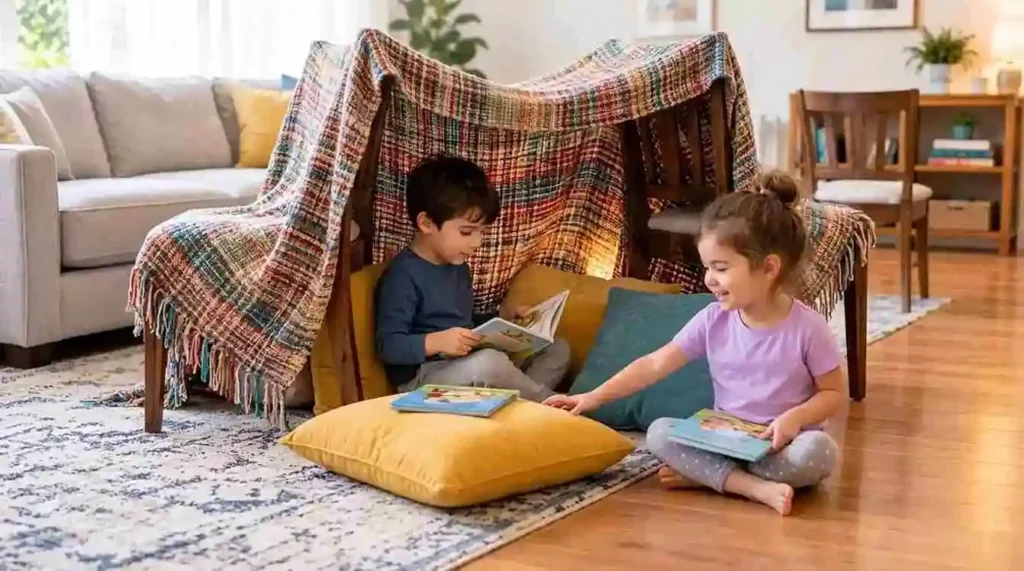
Drape a blanket over two chairs or the back of the couch and pile in a few pillows. A fort gives preschoolers a small enclosed space that feels like their own which supports independent play and self-regulation. Stock it with two or three favorite books.
8. Flashlight Story Time
Turn off the lights, grab a flashlight and read a familiar book by torchlight. The novelty alone extends attention span well beyond a normal read-aloud and it’s an easy way to slow the whole house down before bed.
9. I Spy
“I spy with my little eye something that is blue.” This needs nothing but a room with a few objects in it, and it builds vocabulary, color recognition and observation skills. Let your preschooler take a turn picking the object too.
10. Copy My Face
Make an exaggerated face, surprised, sleepy, grumpy and have your child copy it back. Then switch roles. It sounds simple, but naming and mimicking expressions is one of the ways young children build emotional vocabulary without it feeling like a lesson.
11. Puzzle Time
Whatever puzzle is already in the toy bin works. Puzzles build problem solving and patience and preschoolers often do better with one on the floor than at a table so let them spread out.
Sensory and Tactile Play With What You Already Have
Sensory bins are everywhere in rainy day lists, but most versions ask you to fill a tub with rice or beans first. These versions skip that step.
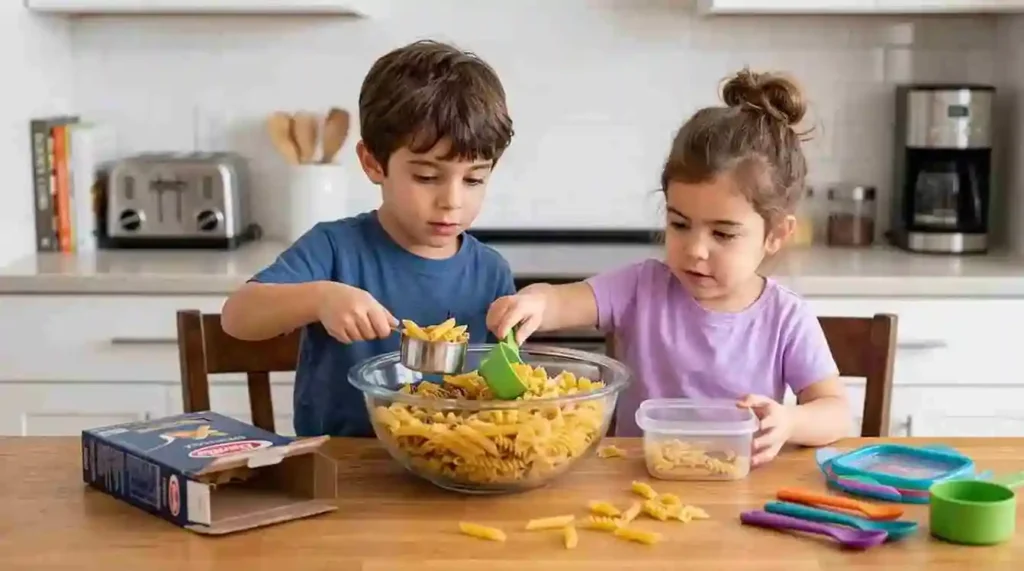
12. Dry Pasta Pour and Scoop
Open a box of dry pasta into a mixing bowl and hand over a couple of measuring cups or spoons. Scooping, pouring, and filling containers builds fine motor control, the same small muscle work kids need later for holding a pencil. Pour it back into the box when you’re done and it’s ready for next time.
13. Texture Hunt
Send your preschooler around the house to find something soft, something bumpy, something smooth and something cold. No supplies needed and it gets them moving room to room while building descriptive vocabulary.
14. Ice Cube Melt Race
Two ice cubes from the freezer, two small bowls and a countdown to see which one melts first. It’s a first taste of a real experiment, complete with a guess before you start and a result to talk about after.
Simple Literacy and Number Games
Short games woven into play do more for early reading and math skills at this age than worksheets ever will.
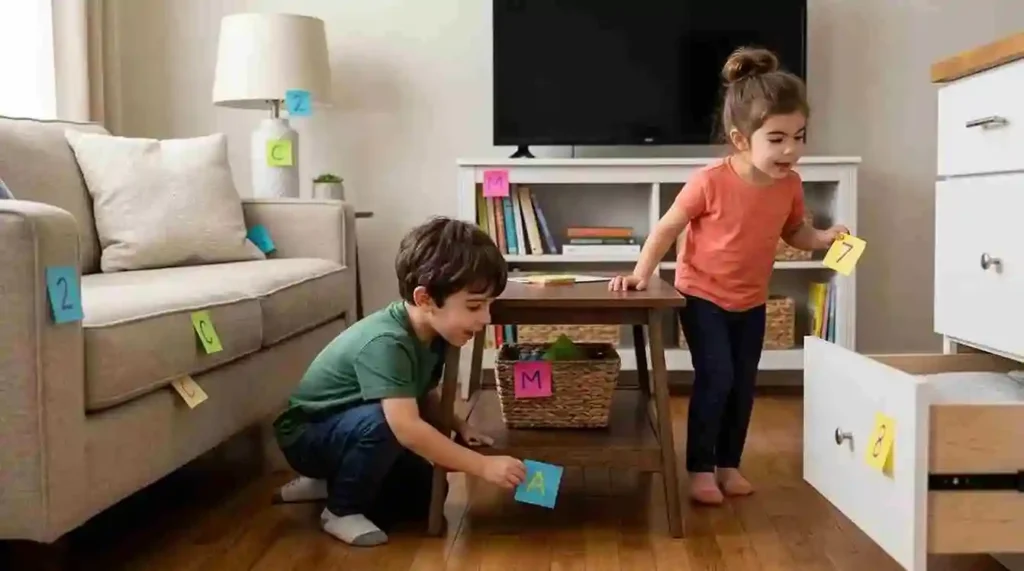
15. Letter or Number Scavenger Hunt
Write a few letters or numbers on sticky notes and hide them around one room. Call out which one to find next. This works on letter recognition through movement instead of sitting still, which suits most preschool attention spans far better.
16. Clap the Syllables
Say a word from around the house, like “refrigerator” or “banana,” and clap once for each syllable together. It’s a two minute game that supports early phonics and works anywhere, including the car.
17. Sock Puppet Show
Pull an old sock onto a hand, draw a face with a marker if you like, and put on a two minute show. Storytelling through a puppet builds language and sequencing skills, and shy kids often talk more freely through a puppet than they will face to face.
Imaginative and Creative Play
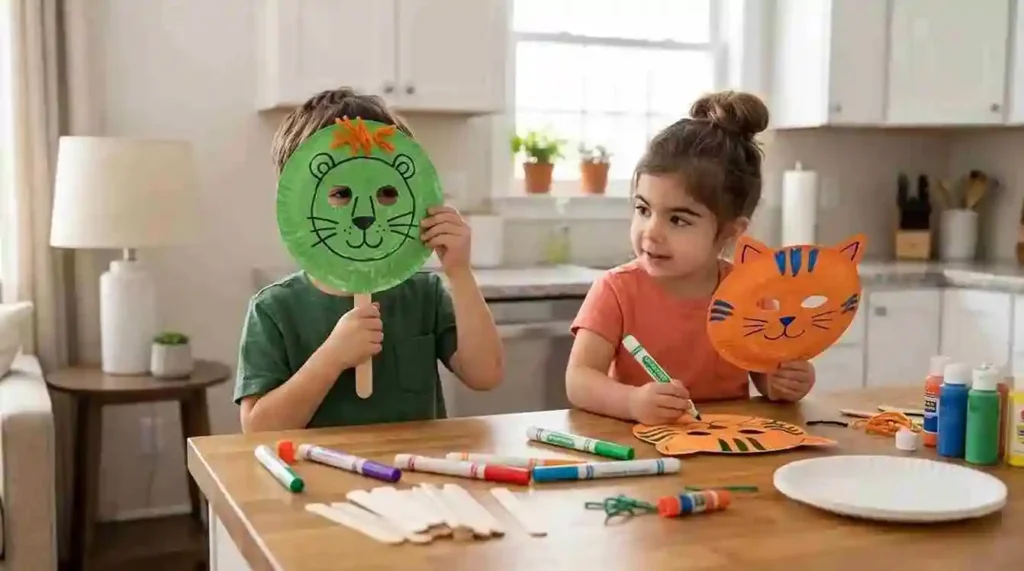
18. Paper Plate Masks
If you have paper plates and a marker, cut two eye holes and let your preschooler draw whatever animal or character they want. Hold it up with a popsicle stick or just their hand. This is one of the only items on this list with a genuine supply but most kitchens already have both.
19. Restaurant Pretend Play
Set up a pretend restaurant using play food, real fruit or even folded paper as “menus.” Taking turns as customer and server builds social skills and early number sense as they “charge” for items and hand over play money or scrap paper.
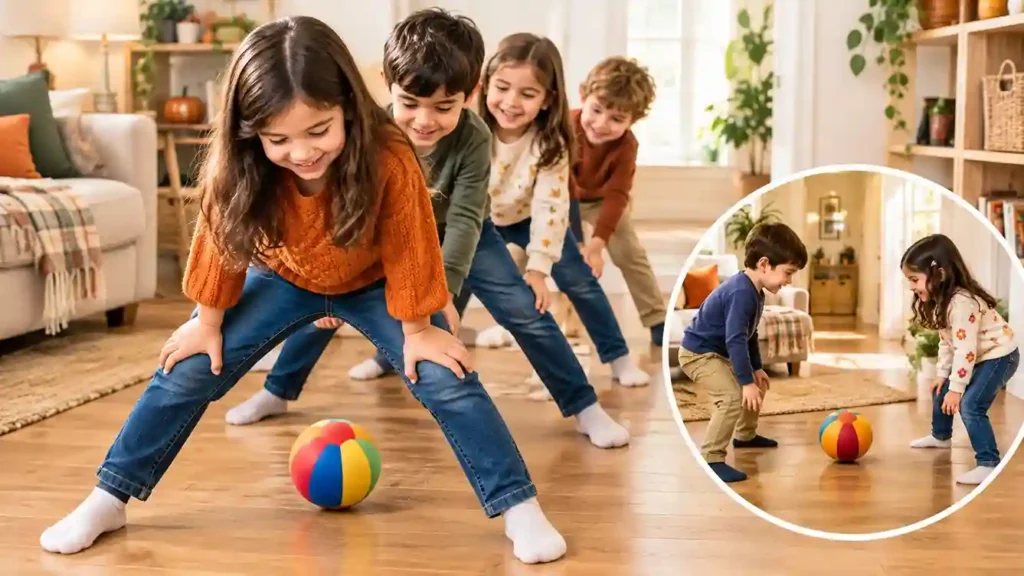
20. Play Tunnel Ball
Line up a few kids or stuffed animals in a row, legs apart standing one behind the other like a tunnel. Roll a ball through each pair of legs from the back to the front. With just one child, stand facing each other with legs apart and roll it back and forth. It builds coordination and turn taking and it turns a hallway into a game in under a minute.
A Few Practical Notes From the Classroom
A few things I’ve learned running these activities with a room full of three and four year olds not just my own child at home:
- Rotate activities every 10 to 15 minutes. Preschool attention spans are short by design and switching before the whining starts keeps the whole day smoother.
- Mix energy levels on purpose. One high energy game followed by one calm activity keeps kids from getting overtired or overstimulated.
- Let them repeat the activity they love. If your preschooler wants to do the obstacle course five times in a row, that repetition is doing real developmental work, not wasting time.
- Keep a small rainy day box. A few sticky notes, a sock an old deck of cards, and a flashlight cover most of this list and take up almost no space.
Rainy days at home take the same kind of planning as anything else on a tight schedule and a tight budget. If you’re already working on building routines that hold up without a second adult in the house, our guide on self-care ideas for single moms has a few ways to fit in a breather while the kids are occupied with a fort or a puzzle. And if the toy pile is taking over a small living room between rainy days, these small space organization ideas can help keep the rainy day box from turning into full blown clutter.
None of these twenty ideas need a shopping trip, a Pinterest board, or an afternoon of prep. They need a preschooler, a bit of open floor space and whatever is already sitting in your kitchen drawer. That’s usually enough to turn a gray, stuck-inside day into one your child actually remembers.