
Signs of Burnout Every Single Mom Should Know
Some nights I sit on the bathroom floor for five minutes after the kids are asleep not doing anything just sitting there because it’s the only five minutes all day that belong to me. If you’ve done something similar and wondered whether that’s normal or whether something deeper is going on this one’s for you.
Burnout doesn’t always look like a dramatic breakdown. Most of the time it looks like getting through the day on autopilot, snapping at your kid over something small and feeling like you’re failing even when you’re doing everything right. Here’s how to actually recognize it and what to do once you do.
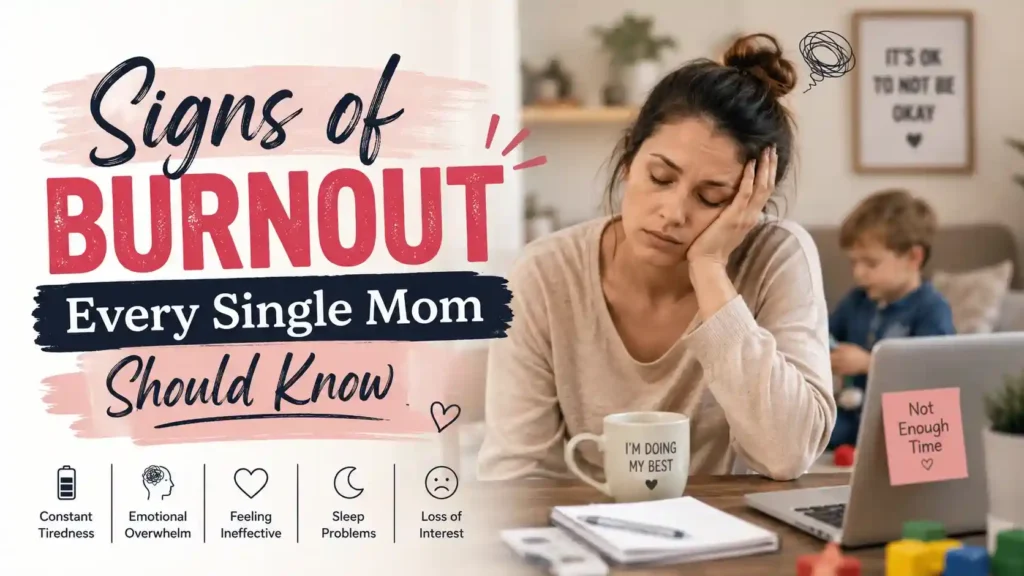
What Burnout Actually Is (and Isn’t)
Burnout is physical, emotional and mental exhaustion that comes from carrying stress for too long without enough time to recover. Psychologist Adam Borland, PsyD at Cleveland Clinic describes it as a state where your motivation drops, your performance suffers and you start feeling negatively about yourself and the people around you. It isn’t a medical diagnosis on its own which is part of why it’s so easy to miss until you’re deep in it.
Burnout is also not the same thing as depression though the two can look alike and sometimes show up together. Dr. Borland offers a helpful way to tell them apart. Burnout is usually tied to a specific source like parenting solo with no backup. Step away from that source on a weekend away or even just a quiet afternoon and burnout tends to ease up. Depression tends to follow you even when the stressful situation isn’t in front of you anymore.
According to Erica Djossa a registered psychotherapist and founder of Momwell mom burnout specifically shows up as bone deep exhaustion, a sense of emotional disconnection from your role as a parent and a nagging feeling that you’re falling short no matter how hard you try. None of that means you love your kids any less. It means the load has outgrown what one person can reasonably carry.
Why Single Moms Are Especially at Risk
Parenting research has found that mothers experience burnout at a much higher intensity than typical workplace burnout largely because there’s no clocking out. You’re the therapist, the chef, the sleep consultant and the one holding the entire schedule in your head often while also working a job.
For single moms that load doesn’t get split with anyone. The team at SPARC a nonprofit resource center for single parents puts it plainly: when there’s no one to share the responsibilities with burnout tends to arrive faster and hit harder. Every school form, every sick day every 2 a.m. wake up call lands on one person.
If money is one of the things keeping you up at night on top of everything else, you’re not imagining that extra weight. Financial stress is one of the most common burnout triggers single moms deal with, and having even a loose budget built around one income can take one recurring worry off your plate.
12 Signs of Burnout Every Single Mom Should Know
Burnout tends to show up in clusters rather than just one symptom. Here’s what to watch for.
1. Exhaustion that sleep doesn’t fix.
You wake up tired even after a full night’s sleep and it doesn’t lift as the day goes on.
2. Snapping over small things.
A dropped cup or a whined complaint sets off a bigger reaction than the moment actually calls for.
3. Feeling emotionally checked out with your kids.
Time with them starts to feel like an obligation to get through instead of something you look forward to.
4. Losing interest in things you used to enjoy.
Hobbies, shows or activities that used to feel good now just feel like one more thing.
5. Constant guilt that you’re failing.
A persistent sense that whatever you’re doing it isn’t enough even when there’s no real evidence of that.
6. Physical symptoms.
Headaches, stomach issues and muscle tension are common physical signs that stress has been building for a while.
7. Changes in eating or sleeping patterns.
Eating a lot more or a lot less than usual or sleeping at unpredictable hours are both common burnout signals.
8. Feeling like nothing you do is ever enough.
A sense of ineffectiveness that shows up even on days when you objectively handled a lot.
9. Pulling away from friends and family.
Avoiding calls or invitations not because you want quiet but because you don’t have anything left to give a conversation.
10. Getting sick more often than usual.
Chronic stress wears down your immune system so frequent colds or infections can be a physical sign of burnout.
11. Dreading routine tasks that never used to bother you.
School pickup, dinner or bedtime start to feel heavier than they should.
12. Going through the motions.
You’re technically doing everything that needs to be done but you feel disconnected from most of it.
If several of these sound familiar that’s worth paying attention to not as a failure on your part but as a signal that you’ve been carrying more than one person can sustainably hold.
Burnout vs Depression: How to Tell the Difference
This distinction matters because the two are often confused and they call for different responses. Burnout tends to improve at least temporarily when you get some distance from the source of the stress. Depression usually doesn’t lift the same way even on a good day or a break from routine.
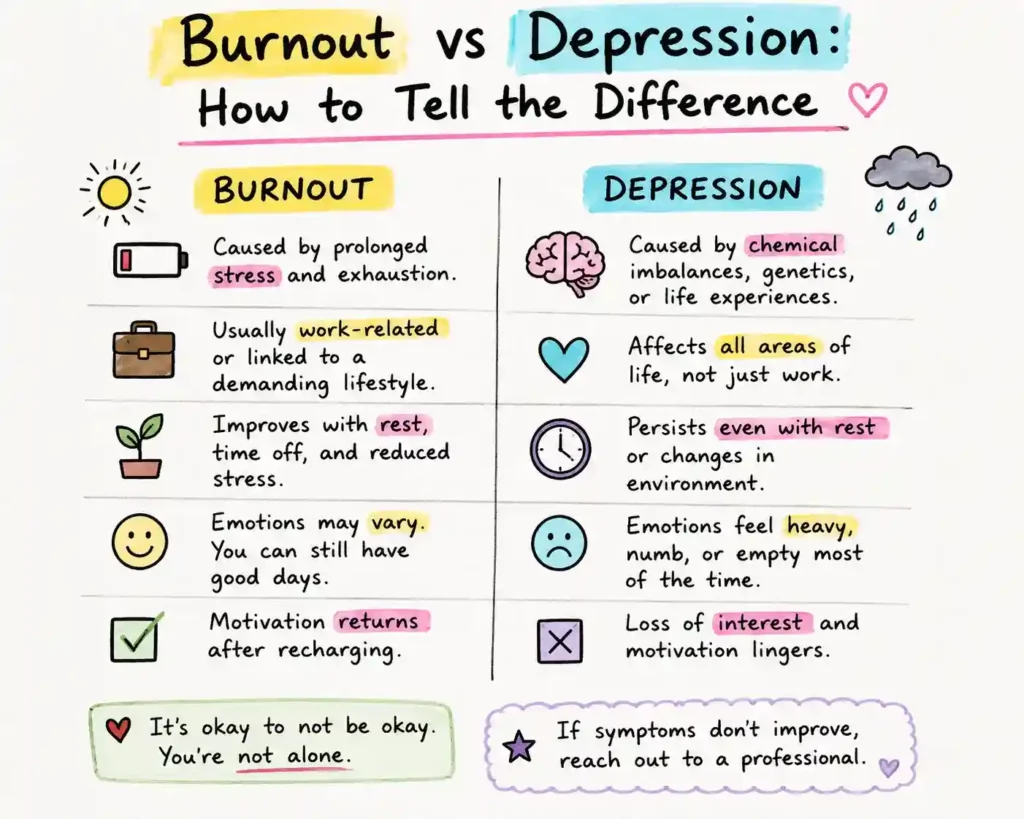
Because burnout and conditions like postpartum depression or anxiety can overlap this isn’t something to sort out entirely on your own. If low mood hopelessness or exhaustion lasts more than two weeks, keeps getting worse or makes it hard to function day to day that’s a sign to loop in a doctor or therapist rather than wait it out.
The Single Parent Factor Nobody Talks About
Most articles about burnout are written with two parents in mind even when they don’t say so directly. Advice like “trade off nights” or “have your partner take the morning shift” assumes there’s someone else to trade off with.
When you’re the only adult in the house recovery has to look different. It’s less about swapping responsibilities with a partner and more about finding smaller ways to lighten the load whether that’s asking an older child to help with an age appropriate task, leaning on a friend or family member for even one afternoon a month or simply giving yourself permission to let something on the to do list wait.
If discipline and daily structure are part of what feels heaviest right now this guide on parenting without a co-parent to back you up might help take some of the guesswork out of your routine, which can free up a little mental space too.
Small Steps That Actually Help
Recovery from burnout doesn’t require a spa weekend you don’t have time or money for. It’s built from smaller repeatable habits.
Practice real self-compassion.
Speak to yourself the way you’d speak to a friend having a hard week not the way your inner critic wants to. Research links self-kindness with your body’s calming response while harsh self-criticism tends to activate the stress response instead.
Set boundaries and actually hold them.
A simple rule that helps: if something isn’t a clear yes treat it as a no. You don’t owe every request your energy.
Treat rest as maintenance, not a reward.
Ten minutes outside a short walk or five quiet minutes with coffee count as real recovery not laziness. If self-care has slipped off your radar entirely these self-care ideas built for single moms are meant to fit into a schedule that doesn’t have much room to spare.
Rebuild real connection.
Surface level friendships don’t do much for burnout. A real phone call or an honest conversation with one person who gets it can lighten the load more than scrolling through a group chat.
Let something go.
The dishes, an unanswered email, a slightly messy living room. Not everything has to get done today for tomorrow to be okay.
When to Reach Out for Professional Support
Reaching out for help isn’t a sign that you’ve failed at this. It’s often the thing that actually moves you forward. If your exhaustion, low mood or sense of falling short has lasted more than two weeks keeps getting heavier or is making it hard to function day to day that’s a reasonable point to talk to a doctor or therapist.
Many community organizations including groups that specifically support single parents also offer reduced cost counseling options if affording therapy is part of what’s holding you back. Even you can share your thoughts with me free of cost.
Frequently Asked Questions
How is burnout different from just being tired?
Ordinary tiredness usually gets better with a good night’s sleep or a restful weekend. Burnout lingers even after rest and it comes with emotional symptoms too like detachment or a sense of failing, not just physical fatigue.
Should I see a doctor or therapist for burnout?
If it’s been going on for more than two weeks is getting worse or is making daily functioning difficult, Yes.
You are not failing. You are carrying more than one person was ever meant to carry alone. And you are still showing up every day. That counts for more than you know.
Mira x