11 Super Easy Ways to Bond With Your Kids
You are doing most of this alone. Work, school pickups, homework, dinner, bedtime and starting it all over again the next day.
By the time everything is done, quality time with your kids can feel like one more thing on a list that never gets shorter.
But here is something research keeps showing: the connection your kids need does not require a perfectly planned activity or a free Saturday. Harvard’s National Scientific Council on the Developing Child calls it “serve and return,” the small, back-and-forth moments between a parent and child that build brain architecture and secure attachment over time.

What your kids need most is already available to you. Most of it happens in the small moments you already have.
1. Put the Phone Down for the First 10 Minutes After Pickup
This one is harder than it sounds and more powerful than most parents expect.
The first 10 minutes after school pickup or when you walk in the door at home are when kids most want to reconnect. They have been holding things to tell you all day.
Put the phone face down, ask one specific question (not “how was your day?” but “what was the best part of lunch?” or “did anything happen today that surprised you?”), and just listen. You do not need to fix anything. Just being present in those 10 minutes signals to your child that they matter more than whatever is on your screen.
2. Let Them Help With What You Are Already Doing
You do not need to carve out extra time for bonding. You need to bring your kids into the time you already have.
If you are making dinner, let them stir, pour, or arrange. If you are folding laundry, let them match socks. If you are grocery shopping, give them the list and let them find things. The task gets done and you are doing it together.

Research published in Pediatrics found that parents who increased shared time with their children by an average of 39 minutes a day saw measurable improvements in the connection between them. Most of those minutes did not have to be planned. They were woven into what was already happening.
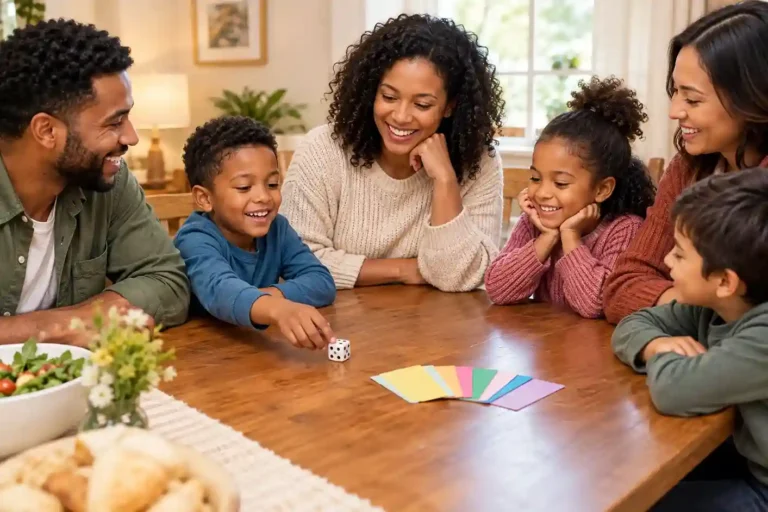
3. Have One Meal Together Every Day
It does not have to be dinner. Breakfast works. A weekend lunch works.
The consistency is what matters more than the timing. A study from the University of Michigan found that children who have regular family meals are more likely to have better academic performance, lower rates of substance use, and stronger emotional connections to their parents.
You do not need a home-cooked meal. You do not need everyone to be in a good mood. You just need the same table, at the same time, with no screens, a few times a week.
4. Read Together, Whatever Their Age
Reading together is one of the most researched bonding activities that exists. Harvard’s Center on the Developing Child identifies reading aloud as one of the clearest ways to build language, connection, and emotional regulation in children at the same time.
Younger kids: read aloud every night at bedtime. Let them choose the book. Even if you have read it 40 times.
Older kids: read the same book separately and talk about it. Or listen to an audiobook on long drives. The shared story gives you something to discuss that is not about homework, chores, or behavior.
5. Start a Weekly One-on-One Tradition
Even 20 minutes of one-on-one time, where your child has your full attention and gets to choose the activity, builds a level of connection that group family time does not replace.
Let them choose. A walk, a game, cooking something together, sitting outside, watching a YouTube video they love while you actually watch it with them. The activity does not matter. The fact that it belongs just to the two of you does.
This is especially important if you have more than one child. Each child needs to feel like they get you, not just a share of you.
6. Ask Better Questions
“How was school?” gets “fine.” Every time.
Better questions get real answers. Try:
- “What was the weirdest thing that happened today?”
- “Who made you laugh today?”
- “What is something you learned this week that you didn’t know before?”
- “Is there anything that has been bugging you that we haven’t talked about?”
Peaceful Parent Happy Kids cites research showing that children who feel heard by their parents are more likely to come to them with problems as they get older. The habit of asking real questions starts now, even if the answers are small.
7. Create a Bedtime Ritual That Belongs to You and Them
Bedtime is one of the most consistent connection windows you have. It happens every night, it is quiet, and kids are more emotionally open at the end of the day than almost any other time.
A bedtime ritual does not have to be elaborate. It can be:
- Three things from the day: one good thing, one hard thing, one funny thing
- Reading one chapter together
- A back scratch while they talk
- A standing “I love you no matter what” before lights out
Whatever the ritual is, keep it consistent. Children find security in the predictability of it, and over time it becomes the moment they look forward to most.
8. Say Yes to Their World Once a Week
Let them explain something to you that they care about, even if you have no interest in it.
Let them show you their Minecraft world. Watch the YouTube video they keep quoting. Ask them to explain the rules of the card game their whole class is obsessed with. Listen without looking at your phone.
This is what A Fine Parent calls “entering their world.” When you show genuine curiosity about what your child loves, it communicates that they are interesting to you as a person, not just as a child to manage. That is different from love. Both matter. But this one is what kids remember.
9. Create a Family Inside Joke or Tradition
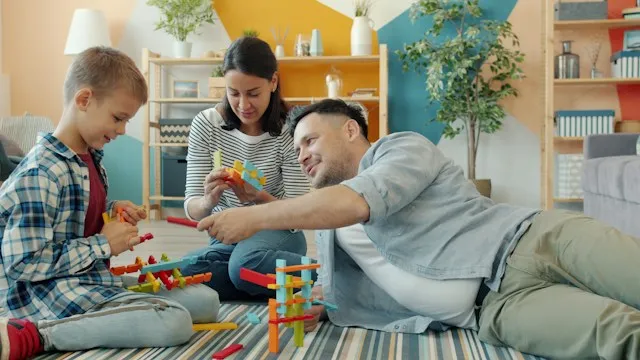
Shared humor is one of the fastest ways to build connection. A running joke, a silly nickname, a phrase that only your family uses, these create a sense of “us” that children carry with them.
It does not have to be planned. Pay attention to what makes your kids laugh and bring it back. Reference it in a text. Bring it up at dinner. Let it become a thing.
The Understood Foundation notes that shared laughter and positive interactions help regulate kids’ emotional states and signal safety within the relationship. The science is real. But also, it is just fun.
10. Let Them See You Handle Hard Things
Single parenting means your kids see more of the real you than kids in two-parent households sometimes do. That is not a disadvantage. It is a source of connection.
When things are hard, you do not have to pretend they are not. You can say “I’m frustrated right now but I’m figuring it out” without burdening your kids with adult stress. When you model coping, you teach them how to cope. When you recover after a hard day and come back calm, you show them what resilience looks like in a person they love.
Kids who see their parents navigate difficulty and come through it build a kind of trust that makes them feel safe even when life is hard. That is bonding too.
11. End Every Day With Something Positive Between You
It does not have to be big. A hug before bed. A text to an older kid. A “hey, I’m proud of you today” for no specific reason.
Virginia Satir, a family therapist quoted widely in bonding research, said we need four hugs a day for survival, eight for maintenance, and twelve for growth. That is a lot of hugs. But even a consistent few, at consistent times, change the emotional temperature of a household.
Your kids are going to remember how they felt in your home more than they will remember any specific day or event. Small, consistent warmth adds up.
You Are Already Doing More Than You Think
If you have read this far, you are already the kind of parent who thinks about this. That matters.
Bonding is not about doing more. It is about being more present in what you are already doing. Ten minutes at pickup. One meal together. A bedtime ritual. A real question on the drive home.
That is it. That is the whole thing.
If you are also working on reducing stress in your household so these moments feel possible our guide to budgeting on one income covers the financial side of making room in your life, because money stress and connection are not separate things. And if you are looking for activities you can do together without spending much, our Christmas bucket list and our free things to do with kids ideas are a good place to start.