Natural DIY Cleaning Recipes for Under $5
You don’t need ten bottles under your sink. You need vinegar, baking soda, a bar of soap and five dollars.
Store-bought “natural” sprays run $4 to $8 a bottle and most only do one job. The ingredients below can clean your whole house and a bottle of white vinegar plus a box of baking soda will run you under $5 and last for months.
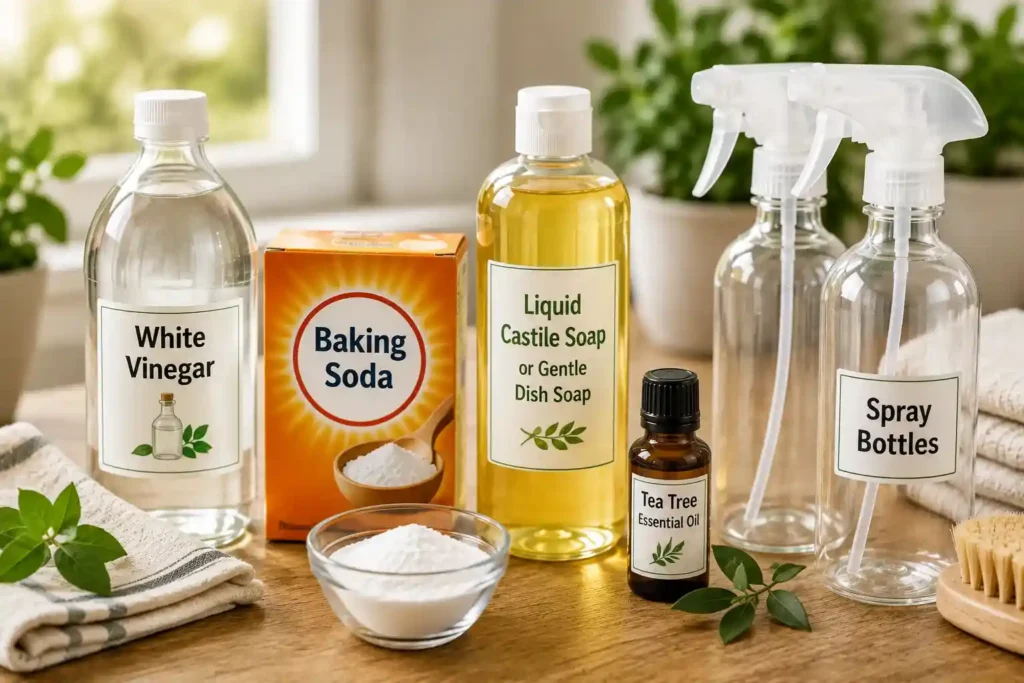
The core natural cleaning kit is white vinegar, baking soda, liquid castile soap (or plain dish soap) and optional tea tree essential oil. Together they cover counters, glass, bathrooms, floors and laundry. A few combinations should never be mixed and that matters more than any recipe.
What to buy (this is your whole cleaning cabinet)
Read this before you mix anything
Homemade doesn’t automatically mean safe to combine. A few rules, backed by research and not just tradition:
- Never mix bleach with vinegar, ammonia or rubbing alcohol. It creates toxic fumes.
- Don’t mix hydrogen peroxide with vinegar in the same bottle either.
- Vinegar and castile soap cancel each other out and curdle into a useless film. Use them separately.
- Skip vinegar on granite, marble, cast iron and waxed wood. The acid can strip or etch these surfaces.
The recipes
All-purpose spray
The one bottle that does most of the work.
- 1 cup water
- 1 cup white vinegar
- 10 to 15 drops tea tree or citrus essential oil (optional)
Combine in a spray bottle, shake and use on counters, stovetops, sealed tile and appliance exteriors. Skip it on stone counters, use 2 cups water with 1 tablespoon castile soap there instead.
Toilet and bathroom cleaner
- ½ cup baking soda
- ¼ cup vinegar
- A small squeeze of castile soap, for scum
Pour baking soda around the bowl, add vinegar let it fizz a few minutes then scrub. For soap scum on tubs and showers, mix baking soda with castile soap into a paste and scrub with a damp sponge.
Glass and mirror cleaner
The one bottle that does most of the work.
- ½ cup vinegar
- ½ cup water
- 1 small pinch cornstarch, to cut streaking
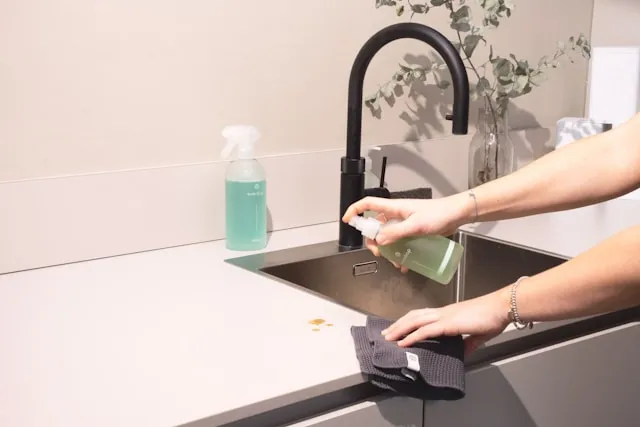
Shake before every use since the cornstarch settles. Spray and wipe with a lint-free cloth.
Floor cleaner
For sealed hard floors, mix ½ cup vinegar into 1 gallon of hot water and mop as usual. Skip vinegar on unsealed wood or wax finishes, plain warm water with a few drops of castile soap is the safer swap there.
Laundry stain remover
Sprinkle a stain with baking soda, spray with vinegar diluted 1:1 with water let it sit 20 minutes then wash as normal. For grease and grass stains a 3 percent hydrogen peroxide solution applied directly works well too, just don’t combine it with the vinegar step.
Wood furniture polish
- ¾ cup olive oil
- ¼ cup white vinegar
- A few drops lemon essential oil, optional
Spray lightly and buff with a dry cloth. For finished wood only not raw or unsealed pieces.
Air freshener
- ½ cup water
- ½ cup vinegar
- 10 to 12 drops of your favorite essential oil
Spray into the air not directly on fabric or furniture unless you’ve spot tested first.
One thing worth knowing
Homemade cleaners don’t have preservatives so most water-based sprays are best used within a day or two. Mix small batches rather than a year’s supply, it’s part of why they’re so cheap to begin with.
Does natural actually mean safer
Worth asking since “natural” gets used loosely. The American Lung Association has linked VOCs in conventional cleaning products to indoor air pollution and respiratory irritation, a concern echoed in a 2024 paper in the journal Environment International. The EPA has also noted that cleaning product safety isn’t closely regulated the way food or medicine is part of why so many people are going back to pantry basics.
That doesn’t mean natural automatically means harmless. Undiluted vinegar and essential oils can still irritate skin and borax should be handled with gloves. Read labels, patch test and keep everything labeled clearly especially if kids are around.
The bottom line
Five dollars, four ingredients and most of your house is covered. If you want the full weekly rhythm this fits into our cleaning schedule for single working moms lays out when to actually use these recipes so cleaning doesn’t eat your whole weekend.
And if stretching every dollar further is the goal our guides on building a budget on one income and 50 ways to save money as a single mom go well with a cleaning cabinet that costs less than one bottle of name-brand spray.
Frequently Asked Questions
Can I really clean my whole house for under $5?
Yes. White vinegar and baking soda are the base of most recipes above and one bottle of each covers months of cleaning across the kitchen, bathroom, floors and laundry.
Is vinegar and baking soda actually an effective cleaner?
They’re effective for different jobs. Vinegar’s acetic acid has documented antibacterial and antifungal properties on its own. Baking soda works mainly as a gentle abrasive. Mixed together they fizz and lift grime but the reaction neutralizes both so for real disinfecting power, use vinegar on its own.